 by
by 
Thinking of selling your land? Discover the key factors that influence land value, understand what buyers look for and learn how to maximise your land’s potential before you sell.
Introduction
If you’re thinking about selling land, the first question you’ll probably ask is:
“How much is my land worth?”
It’s a perfectly reasonable question, but unlike selling a house, there isn’t a simple answer.
Land values can vary enormously. Two neighbouring fields of exactly the same size may have completely different market values because of factors such as planning permission, road access, development potential or even their position within a growing village.
A parcel of agricultural land worth £10,000 per acre today could be worth many times that amount if planning permission is granted in the future. Equally, land that appears ideal for development may be affected by legal restrictions, flood risk or limited access, reducing its value considerably.
The good news is that understanding what influences land values isn’t as complicated as many people think.
In this guide, we’ll explain the main factors that affect land value in the UK, the different types of land buyers are looking for, common valuation mistakes to avoid and how to put yourself in the strongest position before bringing your land to market.
Whether you own agricultural land, woodland, a building plot, a farm, development land, equestrian property, investment land or a smallholding, this guide will help you understand what your land could be worth and why.
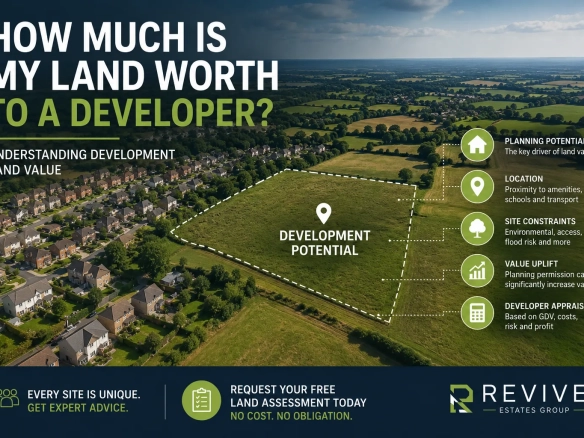
The value of land in the UK depends on several factors, including location, planning permission, access, size, development potential and buyer demand. There is no fixed price per acre because every parcel of land is unique. Understanding these factors helps landowners make informed decisions before selling and achieve the best possible price.
Tired of traditional agent fees?
YourLandStore charges 1% on successful sale only — no upfront costs, no site visits, no hidden charges.
List your land free today →Table of Contents
Why There Is No Simple Price Per Acre
One of the biggest misconceptions among landowners is that all land has a standard value per acre.
Unfortunately, it simply doesn’t work that way.
Unlike residential property, where nearby sales often provide a useful comparison, land is far more individual. Every parcel has its own characteristics, opportunities and limitations.
Professional buyers rarely ask:
“How many acres is it?”
Instead, they ask questions like:
- Can it be developed?
- Does it have road access?
- Are services nearby?
- Is there planning permission?
- Could planning permission be obtained?
- Is it suitable for farming?
- Could it generate income?
- Are there legal restrictions?
These questions often influence value far more than acreage alone.
For example, a five-acre field on the edge of an expanding town could be worth significantly more than a fifty-acre field in a remote rural location if there is realistic development potential.
The lesson is simple:
Land is valued on its opportunities, not just its size.
The 10 Biggest Factors That Affect Land Value
Although every parcel of land is unique, professional buyers usually assess the same key factors before deciding what they’re prepared to pay.
Understanding these factors can help you appreciate why land values vary so dramatically across the UK.
1. Location
Location remains the single biggest influence on land value.
Buyers generally pay more for land that is:
- Close to towns and cities
- Near expanding residential areas
- Easily accessible from major roads
- Located in desirable rural locations
- Close to existing services and infrastructure
Even within the same county, values can differ considerably depending on local demand and future growth.
2. Planning Permission
Planning status can transform the value of land.
Generally speaking, buyers place increasing value on land that has:
- Residential planning permission
- Commercial planning permission
- Tourism or leisure consent
- Agricultural building approvals
- Renewable energy opportunities
Even land without planning permission may command a premium if there is realistic future development potential.
Many experienced developers purchase land based on what it could become rather than what it is today.
Thinking About Selling Your Land?
Every parcel of land is different, which is why understanding its true potential is so important before deciding to sell.
At Your Landstore, we specialise in marketing land throughout the UK, helping landowners present their property professionally and get their land in front of more potential buyers. Whether you own agricultural land, woodland, a farm, development land, a building plot or an investment opportunity, we provide a specialist route to market your land online.
Our transparent 1% No Sale, No Fee service includes professional marketing, buyer enquiries, offer negotiation and support through to completion.
Thinking About Selling Your Land?
Get your land in front of more potential buyers.
At Your Landstore, we specialise in marketing land throughout the UK, helping landowners present their property professionally and reach buyers looking for agricultural land, woodland, farms, development sites, building plots and investment opportunities.
You can advertise your land online by creating your own listing, or let us prepare the listing for you.
Advertise Your Land →No upfront marketing fee • No obligation to sell
3. Development Potential
Planning permission isn’t the only thing buyers consider.
Land located near existing housing developments, employment sites or expanding settlements may attract developers who are prepared to invest for the future.
This is often referred to as hope value or strategic development potential.
Even if development isn’t currently possible, buyers may recognise long-term opportunities that increase the land’s appeal.
4. Access
Access is one of the first things experienced buyers investigate.
They’ll want to know:
- Is there direct road access?
- Are legal rights of way documented?
- Can construction vehicles gain access?
- Is agricultural machinery able to enter the land?
- Could access be improved?
Poor access doesn’t necessarily prevent a sale, but it can reduce both buyer interest and market value.
5. Utilities and Services
For many buyers, particularly developers, nearby services are an important consideration.
These may include:
- Electricity
- Water
- Drainage
- Gas
- Fibre broadband
- Public sewer connections
Land requiring expensive infrastructure works may be less attractive than comparable land where services are already available.
6. Size and Shape of the Land
Many landowners assume that larger parcels automatically achieve higher values. In reality, that’s not always the case.
While a larger site may have a higher overall value, the price per acre can actually decrease as the size of the parcel increases. This is because the pool of buyers able to purchase larger areas of land is often much smaller.
Conversely, smaller parcels can attract greater competition from lifestyle buyers, neighbouring landowners, investors and self-build purchasers, sometimes resulting in a stronger price per acre.
The shape of the land also matters.
Regular, well-proportioned parcels are generally easier to farm, develop or manage than awkward or fragmented sites. Narrow strips of land, irregular boundaries or parcels split by roads, rivers or rights of way may reduce buyer interest depending on the intended use.
7. Ground Conditions and Topography
The physical characteristics of your land can have a significant influence on its market value.
Buyers will often assess:
- Ground stability
- Soil quality
- Drainage
- Flood risk
- Existing vegetation
- Changes in ground level
- Boundary features
- Natural watercourses
For agricultural buyers, soil quality and drainage can directly affect productivity.
For developers, ground conditions can significantly influence construction costs. Land requiring extensive remediation, flood mitigation or engineering works is usually less attractive than a level, well-drained site.
These issues don’t necessarily prevent a successful sale, but they can affect both buyer demand and achievable value.
8. Existing Buildings and Improvements
Buildings can either increase or decrease the value of land depending on their condition, use and future potential.
Examples include:
- Farmhouses
- Agricultural barns
- Stables
- Commercial buildings
- Storage units
- Workshops
- Residential properties
- Holiday accommodation
A modern agricultural building with useful storage may add considerable value for a farming purchaser, while an older redundant building may offer redevelopment potential for another buyer.
The key question is always:
“What opportunities does this property create for the next owner?”
9. Legal Matters
Legal issues are often overlooked until a buyer begins carrying out due diligence.
However, experienced buyers will investigate these matters long before making an offer.
Examples include:
- Title restrictions
- Easements
- Rights of way
- Overage agreements
- Restrictive covenants
- Tenancies
- Sporting rights
- Mineral rights
Having clear documentation available from the outset can increase buyer confidence and help transactions progress more smoothly.
If there are legal complexities, presenting them openly with supporting information is generally far better than allowing buyers to discover them later during the conveyancing process.
10. Market Conditions
Like every property market, land values are influenced by wider economic conditions.
Factors that can affect demand include:
- Interest rates
- Agricultural commodity prices
- Government planning policy
- Housing demand
- Infrastructure investment
- Environmental legislation
- Investor confidence
These factors change over time, which is why identical parcels of land may achieve different prices depending on when they are brought to market.
Timing can therefore be almost as important as the land itself.
Land values in the UK can range from around £5,000 per acre for some agricultural land to several million pounds per acre for land with valuable residential planning permission. Understanding where your land sits on that spectrum is one of the most important steps before selling.
Different Types of Land Are Valued Differently
Not all buyers are looking for the same opportunities.
Understanding who is likely to purchase your land is one of the most important parts of achieving the best possible sale price.
Agricultural Land
Agricultural land is typically purchased by:
- Farmers expanding existing holdings
- Agricultural businesses
- Investment buyers
- Environmental and biodiversity projects
Productive soils, good access and larger contiguous parcels are often particularly attractive.
Woodland
Woodland buyers may include:
- Private individuals
- Forestry companies
- Conservation organisations
- Lifestyle buyers
- Long-term investors
Ancient woodland, commercial forestry and amenity woodland can each appeal to different types of purchaser.
Building Plots
Individual building plots usually attract:
- Self-build buyers
- Small developers
- Local builders
- Private investors
Planning permission, utilities and location are often the biggest value drivers.
Development Land
Residential and commercial development sites are assessed very differently from agricultural land.
Developers will consider:
- Planning prospects
- Site constraints
- Local housing demand
- Infrastructure
- Build costs
- Future profitability
As a result, development land can achieve values significantly above existing use value where realistic development opportunities exist.
Farms, Smallholdings and Equestrian Property
These often appeal to multiple buyer groups, including:
- Farmers
- Lifestyle purchasers
- Equesestrian buyers
- Investors
- Families seeking rural homes
Properties with multiple income opportunities or flexible future uses often attract particularly strong interest.
Could Your Land Be Worth More Than You Think?
One of the biggest mistakes landowners make is assuming their land is only worth its current use.
In reality, experienced buyers often look beyond what the land is today and focus on what it could become in the future.
For example:
- A farmer may see opportunities to expand an existing holding.
- A developer may recognise long-term housing potential.
- An investor may be interested in future planning prospects.
- An environmental organisation may value the land for biodiversity or conservation projects.
- A leisure buyer may see potential for camping, glamping or recreational use.
These opportunities aren’t always obvious to the landowner, which is why understanding your land’s potential before selling is so important.
Sometimes a seemingly ordinary parcel of land can attract interest from several different buyer groups, creating stronger competition and ultimately a better sale price.
Common Mistakes That Can Reduce Land Value
Many landowners unintentionally make decisions that can limit buyer interest or reduce the eventual sale price.
Some of the most common mistakes include:
Assuming neighbouring land sets your value
While nearby sales can provide useful guidance, no two parcels of land are exactly alike.
Access, planning status, services, boundaries and development potential all influence value, meaning neighbouring land may not provide an accurate comparison.
Focusing Only on Acreage
Many people ask:
“How much is land worth per acre?”
Unfortunately, this is one of the least reliable ways to estimate value.
A small building plot with planning permission may be worth considerably more than many acres of agricultural land elsewhere.
It’s the quality and potential of the land—not simply its size—that buyers are paying for.
Marketing Before Understanding Development Potential
Once land has been sold, any future uplift in value usually belongs to the new owner.
Before marketing your land, it’s sensible to consider questions such as:
- Could planning permission be achievable?
- Is the local area expanding?
- Are there future development opportunities?
- Would the land benefit from a planning appraisal?
Even if development isn’t immediately possible, understanding the potential allows you to make informed decisions.
Poor Presentation
First impressions matter.
Professional buyers expect clear information, including:
- Accurate plans
- Professional photography
- Drone imagery
- Boundary plans
- Planning history
- Access details
- Supporting documents
Well-presented land often generates more enquiries and encourages stronger offers.
How Buyers Assess Your Land
Most buyers don’t simply look at an asking price and decide whether to proceed.
Instead, they evaluate the land against a series of questions.
Typical considerations include:
- Does this land meet my objectives?
- What opportunities does it offer?
- What risks are involved?
- What costs will I incur after purchase?
- Could the value increase in the future?
- Is there competition from other buyers?
Understanding how buyers think allows sellers to present their land more effectively and answer questions before they’re even asked.
Considering Selling Your Land?
At Your Landstore, we understand that every parcel of land is different.
Rather than simply listing land online, we work with landowners across the UK to present their property professionally, highlight its strengths and market it to the most appropriate audience.
Whether you’re selling agricultural land, woodland, farms, development land, building plots, investment land or equestrian property, our transparent 1% No Sale, No Fee service is designed to maximise exposure while providing support from initial enquiry through to completion.
Sell your land with YourLandStore
1% fee on successful sale only. No upfront costs. No site visits. UK-wide exposure on Zoopla and social media.
List your land →How it worksShould You Obtain a Professional Valuation?
If you’re serious about selling, obtaining professional advice before marketing your land is usually worthwhile.
A specialist assessment can help identify:
- Development opportunities
- Planning considerations
- Likely buyer groups
- Realistic pricing
- Potential obstacles
- Marketing strategy
This doesn’t just help establish an asking price—it helps position your land correctly from the outset.
Launching at the right price with the right information often generates greater buyer confidence than repeatedly reducing an unrealistic asking price.
Final Thoughts
Every parcel of land tells a different story.
Some have immediate development potential, others appeal to farmers or investors, while many offer opportunities that aren’t immediately obvious.
Understanding what influences land value is one of the most important steps you can take before deciding to sell.
Rather than focusing solely on acreage or neighbouring sales, consider the wider picture—planning potential, location, access, presentation and the buyers most likely to recognise your land’s true value.
Taking the time to understand these factors can make a significant difference to both the level of buyer interest and the final sale price you achieve.
Whether you’re simply exploring your options or ready to bring your land to market, being well informed is always the best place to start.
Not sure whether to sell or explore development potential first?
Before you sell it’s worth understanding whether your land could be worth significantly more with planning permission. Our sister company Revive Estates offers free land assessments across the UK.
Get a free land assessment →Frequently Asked Questions
How can I find out how much my land is worth?
The best starting point is to understand your land’s location, planning status, access, size and potential uses. A specialist land agent can then provide a realistic assessment based on current market conditions and likely buyer demand.
Does planning permission always increase land value?
In many cases it does, but the amount depends on the type of planning permission, location, demand and the overall viability of development. Even land without planning permission may have significant future potential.
Can agricultural land become development land?
Some agricultural land may be suitable for future development if local planning policies support growth. However, every site is different and development potential should always be assessed individually.
Should I improve my land before selling?
Simple improvements such as clearing access routes, organising paperwork, obtaining professional photographs and presenting the land well can improve buyer confidence and help generate stronger interest.
Is an online land valuation accurate?
Online estimates can provide a very rough guide but are rarely accurate for individual parcels of land. Every site is unique, and factors such as planning potential, access, legal matters and buyer demand can have a significant impact on value.