 by
by 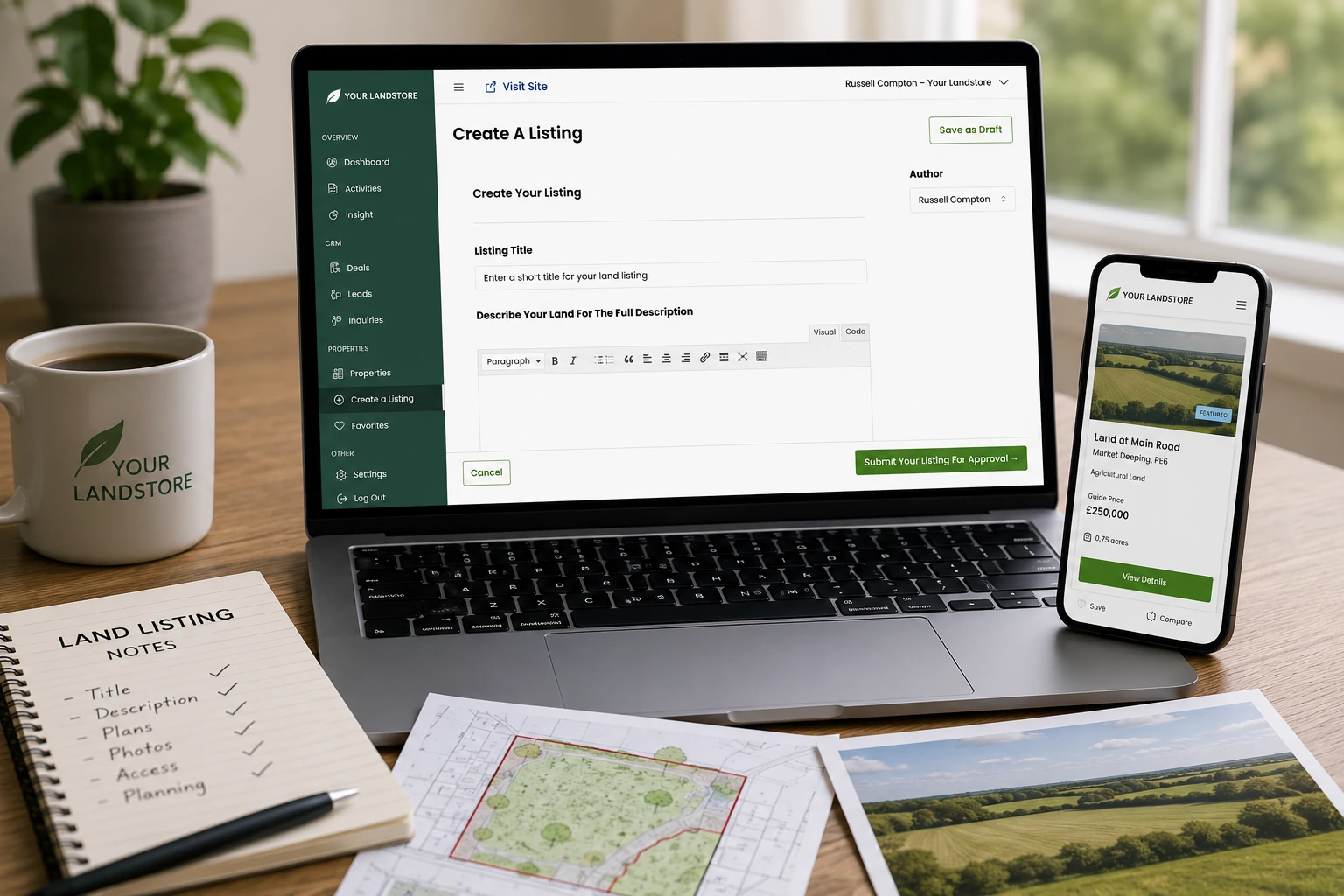
If you have decided to sell your land, the first practical step is to create a clear and accurate listing that gives potential buyers the information they need to understand the opportunity.
Whether you are selling agricultural land, a building plot, a paddock, amenity land, woodland or land with potential for development, the information you provide can make a significant difference to how easily potential buyers can assess it.
To list land for sale, you will normally need to gather the key details about the property, including its location, boundaries, size, photographs and any relevant planning or legal information. You can then use this information to create a listing and begin marketing the land.
This guide explains how to list your land for sale, what information you may need to prepare and how to create a clear listing that helps attract relevant potential buyers.
If you’re considering selling your land, our complete guide to how to sell land in the UK explains the wider selling process, including preparing your land, finding buyers, marketing, negotiating offers and completing the sale.
Gather the Basic Information About Your Land
Before listing your land for sale, it is helpful to gather the basic information that potential buyers are likely to want to know. Having this information ready can make it easier to create an accurate listing and respond to enquiries once the land is being marketed.
You do not necessarily need to have every document or detail available before you begin, but you should aim to provide as much clear and accurate information as possible.
Key Information to Prepare
Depending on the type of land you are selling, useful information may include:
- Location – where the land is situated, including the nearest town or village and postcode where available.
- Size – the approximate area of the land, usually in acres, hectares or square metres.
- Boundaries – a clear indication of the land included in the sale, ideally shown on a plan.
- Access – details of how the land can be accessed, including any public road frontage, private access or rights of way.
- Current use – for example agricultural, grazing, amenity, woodland, residential garden or another use.
- Planning information – details of any planning permission, planning applications or relevant development potential.
The information you include should always be accurate. If there is something you are unsure about, it is generally better to explain that further information is available or still being confirmed rather than making assumptions in the listing.
Once you have gathered the basic details, the next step is to make sure potential buyers can clearly identify the land and understand exactly what is being offered.
Clearly Identify the Land and Its Boundaries
When listing land for sale, potential buyers should be able to quickly understand exactly what is being offered. A clear location description and plan showing the land can make the listing easier to understand and help reduce unnecessary enquiries.
Use a Clear Location
Include the nearest town or village and, where available, a postcode or other clear location reference. If the land does not have its own postal address, provide enough information for potential buyers to identify its general location.
Show the Land on a Plan
A plan can be one of the most useful parts of a land listing. It should clearly show the area included in the sale and help potential buyers understand the shape, position and extent of the land.
Where appropriate, the land being offered for sale can be outlined clearly on a location or site plan. This is particularly useful where the land forms part of a larger field, garden, farm, estate or other property.
Make the Boundaries Clear
If the exact boundaries are known, make sure the information in your listing accurately reflects what is being offered. Avoid creating uncertainty by using plans or descriptions that could be misunderstood.
If access rights, shared access, rights of way or other arrangements are important to the use of the land, these may also need to be explained clearly so that potential buyers can understand the position.
Once a potential buyer can clearly identify the land, the next step is to provide photographs and other information that help them understand what the land looks like and the opportunity it presents.
Take Photographs and Prepare Supporting Information
Good photographs can help potential buyers understand your land before arranging a viewing. Try to include a range of clear images that show the land as it is and give an accurate impression of its size, setting and surroundings.
Take Clear Photographs of the Land
Depending on the type of land, useful photographs may include:
- Wide views of the land – showing its overall appearance and character.
- Access points – particularly where access is an important feature of the property.
- Boundaries and frontage – where these help explain the land being offered.
- Views and surroundings – helping buyers understand the location and setting.
- Important features – such as woodland, water, buildings, stables, grazing land, road frontage or other relevant features.
You do not need professional photography for every land listing, but the images should be clear, recent and representative of the property. Avoid photographs that could give a misleading impression of the land or fail to show important features.
Gather Relevant Supporting Information
You may also have documents or information that could help potential buyers assess the opportunity. Depending on the land, this could include plans, planning documents, access information, surveys, reports or other relevant property details.
You do not need to upload every document you hold, but making key information available can help serious buyers understand the land and may reduce the need for basic follow-up questions.
Once you have prepared the photographs and supporting information, the next step is to write a clear description explaining the land and its main features.
Write a Clear Description of Your Land
A clear description helps potential buyers quickly understand what is being offered and whether the land may be suitable for their needs. The aim is not to include every possible detail, but to provide enough useful information for someone to understand the land and decide whether they would like to find out more.
Start with the Main Features
Begin by explaining what type of land is for sale and its main characteristics. Depending on the property, this could include its approximate size, location, current use, access and any features that may be particularly relevant to a potential buyer.
For example, the description may explain whether the land is agricultural land, grazing land, woodland, amenity land, a building plot or another type of property.
Explain What Is Included
Make it clear what is included in the sale. If the land includes buildings, stables, storage, water, road frontage, rights of access or other important features, these can be mentioned where relevant.
Where something is not included, or where there are particular arrangements affecting the land, it is better to make this clear rather than leave potential buyers to make assumptions.
Include Relevant Planning Information
If the land has planning permission, a planning application or other relevant planning history, this information can be included in the listing.
Where land may have development potential but does not have planning permission, take care to describe this accurately. Avoid suggesting that planning permission is likely or guaranteed unless there is clear evidence to support that position.
Keep the Description Clear and Accurate
A good land listing should be easy to understand. Use clear language, focus on the most relevant features and avoid making claims that cannot be supported.
You do not need to write the description entirely on your own. If you are using a specialist land marketing service, they may be able to help present the information clearly and structure the listing around the features most relevant to potential buyers.
Once the key information has been prepared, the next step is to decide how the land will be listed and make the information available to potential buyers.
Explain the Planning Position and Any Relevant Potential
When listing land for sale, it is important to explain the planning position accurately. This may be particularly relevant for building plots or land with development potential, but planning information can also be useful for other types of land.
If the Land Has Planning Permission
If planning permission has been granted, include the key details in the listing. This may include the type of development approved, the planning reference and the name of the local planning authority.
Where appropriate, you can also make supporting information available, such as approved plans and relevant planning documents, so potential buyers can understand what has been permitted.
If the Land Does Not Have Planning Permission
Land does not need planning permission to be offered for sale. Agricultural land, amenity land, woodland, grazing land and many other types of land may be marketed and sold without any planning permission being in place.
If there is no planning permission, simply make the current position clear. If the land has a planning history or other information that may be relevant, this can also be included where appropriate.
Where Land May Have Development Potential
If you believe your land may have potential for development, it is important to describe this carefully. Unless planning permission has already been granted, avoid presenting potential development as a certainty.
Depending on the circumstances, you may wish to obtain an opinion on the land’s potential before deciding how to market it or what information should be included in the listing.
Understanding the planning position and any potential of your land can also help you decide how best to present it to potential buyers.
Not Sure What Your Land Could Be Worth?
Before listing your land for sale, you may want an opinion on its potential, the type of buyers it could appeal to and how it could be positioned in the market.
Get an Opinion on Your Land →Choose How You Want to List Your Land
Once you have gathered the key information about your land, you will need to decide how you want the property to be listed and presented to potential buyers.
There are several ways to do this, depending on how much involvement and support you want during the process.
List Your Land Yourself
If you are comfortable preparing the information and managing enquiries, you may choose to create and manage the listing yourself. This can give you direct control over the information presented and how enquiries are handled.
Use a Land Agent or Specialist Land Service
A specialist land agent or land marketing service can help prepare and present the listing using the information you provide. Depending on the service, they may also help with marketing, handling enquiries and putting the land in front of relevant potential buyers.
This can be particularly useful if you are unsure how to describe the land, what information should be included or how best to present its features and potential.
Choose the Right Approach for Your Land
The right approach will depend on the type of land you are selling, the level of support you need and how actively you want to be involved in managing the process.
If you are still deciding where and how to market your land, our guide to where you can sell your land explains the different routes available.
Once you have decided how you want to proceed, the next step is to submit the information and create the listing ready to go live.
Create and Publish Your Land Listing
Once you have prepared the key information about your land, you are ready to create the listing and begin the process of making it available to potential buyers.
Provide the Key Details
The first step is to provide the information needed to prepare the listing. This will typically include the location of the land, its approximate size, a plan showing the area being offered for sale, photographs and a description of the property.
You can also provide any additional information that may help explain the land, such as planning details, access arrangements, relevant documents or other important features.
Make Sure the Listing Is Accurate
Before the listing goes live, check that the information accurately reflects what is being offered for sale. In particular, make sure the location, boundaries, size and description of the land are clear.
It is also important to ensure that any statements about planning permission, access, rights or development potential are presented accurately and do not create the wrong impression for potential buyers.
Publish Your Listing
Once the information has been prepared and checked, the listing can be published and made available to potential buyers.
With YourLandStore, landowners can submit their land details and we can help prepare the listing before it goes live. This means you do not necessarily need to create the entire listing yourself or work out how best to present every aspect of the property.
Once your listing is live, the next stage is to manage enquiries and make sure interested buyers have the information they need to decide whether to take the next step.
Ready to List Your Land for Sale?
Submit your land details to YourLandStore and we can help you prepare and market your listing to reach potential buyers.
Sell Your Land →What Happens After Your Land Is Listed?
Once your land listing is live, potential buyers can review the information, photographs and supporting details to decide whether the property may be suitable for their requirements.
Responding to Enquiries
Interested buyers may want further information about the land before deciding whether to arrange a viewing or make an offer. Having your plans, documents and other relevant information available can help you respond more quickly to serious enquiries.
Providing Further Information
Some buyers may have questions about access, boundaries, planning, current use or other aspects of the land. Where possible, providing clear and accurate information can help buyers understand the opportunity and decide whether they wish to proceed.
Arranging Viewings and Considering Offers
As interest develops, potential buyers may request a viewing or ask further questions before making an offer. You can then consider any offers received and decide whether they meet your expectations and circumstances.
If you need to understand more about attracting potential purchasers, our guide on how to find a buyer for your land explains the different ways land can be put in front of relevant buyers.
Listing your land is the first step in making it available to the market. By preparing clear information, photographs, plans and supporting documents, you can give potential buyers a better understanding of what is being offered and help them decide whether the land is right for them.
Ready to List Your Land for Sale?
Whether you are selling a building plot, agricultural land, amenity land, woodland, grazing land or land with development potential, YourLandStore can help you get your land in front of potential buyers.
Sell Your Land with YourLandStore →Frequently Asked Questions About Listing Land for Sale
How do I list my land for sale?
To list land for sale, start by gathering the key information about the property, including its location, size, boundaries, access and current use. You should also prepare a clear plan, photographs and any relevant planning or supporting information. The details can then be used to create and publish a land listing.
What information do I need to list land for sale?
The information required will depend on the type of land, but useful details can include its location, approximate size, boundaries, access arrangements, current use, photographs and any relevant planning information or supporting documents.
Do I need planning permission before listing land for sale?
No. Many types of land can be sold without planning permission, including agricultural land, grazing land, woodland and amenity land. If planning permission has been granted, or the land has relevant planning history, this information can be included in the listing.
Can I list land for sale myself?
Yes. You can prepare the information and manage the listing yourself, or you can use a specialist land agent or land marketing service to help prepare, present and market the property.
Do I need a plan to sell land?
A clear plan is usually very helpful because it allows potential buyers to understand exactly what land is being offered for sale. This can be particularly important where the land forms part of a larger property, field, garden or estate.
What photographs should I include in a land listing?
Include clear and recent photographs showing the overall land, access points, boundaries where relevant, important features and the surrounding setting. The photographs should give potential buyers an accurate impression of the property.
Can I get help creating my land listing?
Yes. A specialist land marketing service can help you prepare and present your listing using the information, plans and photographs you provide. This can be useful if you are unsure what information to include or how best to describe the land.