by
by 
If you are thinking about buying land in the UK, one of the first questions is usually: how much does it cost to buy land? The answer depends heavily on what the land can be used for, where it is located, whether it has planning permission and how much development potential it offers.
A small building plot in a sought-after location can be worth considerably more than several acres of agricultural land, while land with planning permission for development can have a very different value again.
How Much Does It Cost to Buy Land?
There is no single price for land in the UK. The cost can range from relatively low values for agricultural or amenity land to hundreds of thousands or substantially more for land with residential development potential.
The most important factors are usually location, planning status, permitted use, acreage, access, services and development potential.
TELL US WHAT LAND YOU’RE LOOKING FOR →Why Does Land Cost So Much?
Land is not valued simply by the number of acres it contains. Two pieces of land of exactly the same size can have completely different values because they have different potential uses.
For example, one acre of agricultural land may have limited development potential, while one acre inside a settlement boundary with planning permission for several houses could have a substantially higher value.
This is why buyers should be careful when comparing advertised land prices. A simple price per acre comparison does not necessarily tell you whether one opportunity represents better value than another.
What Affects the Cost of Buying Land?
Several factors can have a major effect on the price you may need to pay.
Location
Location is one of the biggest influences on land value.
Land close to established settlements, transport links, employment areas, schools and other amenities may attract greater demand than land in a more remote location.
For development land, the local property market is particularly important. The potential value of the completed development can influence what a developer or other purchaser may be prepared to pay for the land.
Planning Permission
Planning status can make a substantial difference to land value.
Land with no planning permission may have limited immediate development potential, although it could still be of interest to buyers depending on its location and circumstances.
Land with planning permission for a house or houses is a different proposition because the purchaser has greater certainty about what can be developed, subject to the planning permission and its conditions.
Planning permission does not automatically mean that a site is straightforward or inexpensive to develop. Buyers still need to investigate conditions, access, services, construction costs and other site constraints.
What the Land Can Be Used For
The permitted or potential use of land is fundamental to its value.
Land might be suitable for agriculture, equestrian use, recreation, woodland, a smallholding, a self-build property or a larger residential development.
These different uses can produce very different land values.
Size and Usable Area
The amount of land being purchased is important, but the total acreage is not the only consideration.
A larger parcel may contain areas that cannot practically be developed or used for the purpose the buyer has in mind because of access, topography, drainage, ecology, landscape restrictions or planning constraints.
When comparing land for sale, consider the usable area as well as the headline acreage.
Access
Good access can be particularly important for development land and building plots.
Buyers should establish how the site is accessed, whether the access is legally established and whether it is suitable for the intended use.
For a development site, highway requirements may also affect what can ultimately be built.
Services and Infrastructure
Water, electricity, drainage, gas, telecommunications and other services can all affect the practicality and cost of developing land.
A plot that appears inexpensive may require significant expenditure to connect services or provide suitable infrastructure.
Service availability should therefore form part of the buyer’s due diligence rather than being treated as an afterthought.
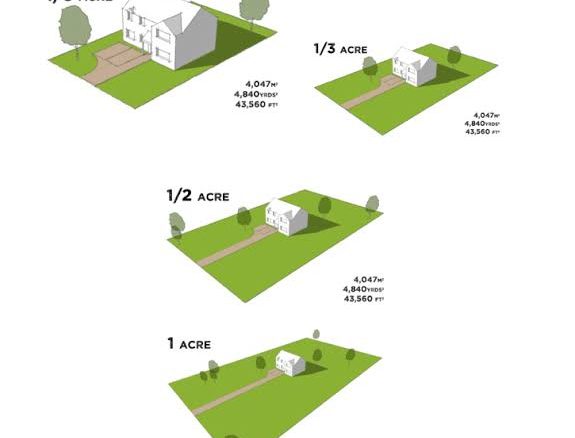
How Much Does an Acre of Land Cost?
There is no reliable single figure for what an acre of land costs across the UK.
An acre of agricultural land, an acre of equestrian land and an acre of land with residential planning permission are fundamentally different products and can command very different prices.
Even within the same category, values can vary according to location, quality, access, planning circumstances and demand.
Don’t Compare Land Solely by Price Per Acre
Price per acre can be useful as a starting point, but it should not be the only measure you use when comparing opportunities.
Consider what you are actually buying, what you can legally and practically do with the land, and what additional expenditure may be required after completion.
How Much Does a Building Plot Cost?
Building plots can vary significantly in price.
A plot with planning permission for one house in a desirable location may command a substantial price, particularly where there is strong demand for housing.
The value can also depend on the size and type of property permitted, the quality of the location, access, services and any planning conditions attached to the permission.
If you are specifically looking for a building plot, you can browse building plots for sale on Your Landstore or read our guide to how much a building plot is worth.
How Much Does Development Land Cost?
Development land can be significantly more valuable than land with no identified development potential, but there is no standard UK price.
A developer may consider factors such as:
- the number of homes or other units that could potentially be developed;
- the likely value of the completed properties;
- planning requirements and risk;
- site acquisition costs;
- construction costs;
- infrastructure and abnormal costs;
- professional fees;
- finance costs;
- the expected timescale; and
- the level of return required from the development.
This is why a developer’s assessment of land value can be very different from the value of the same land for another potential use.
What About Land Without Planning Permission?
Land without planning permission can still attract buyers, depending on its location and circumstances.
Some buyers are looking for agricultural or recreational land, while others may be interested in land that they believe could have future development potential.
However, buyers should not assume that buying land without planning permission means they will subsequently obtain permission.
Planning policies, site constraints, access, landscape, ecology, infrastructure and many other factors can influence whether a proposal is acceptable.
If you are considering this type of purchase, investigate the planning position carefully before committing to the acquisition.
What Additional Costs Should You Budget For?
The purchase price is not necessarily the total cost of acquiring and using land.
Depending on the type of purchase, buyers may also need to budget for professional and transaction-related costs.
Potential Costs to Consider
- Legal fees for conveyancing and reviewing the title and contract.
- Stamp Duty Land Tax, where applicable.
- Survey costs and other technical investigations.
- Planning advice where the purchase involves development potential.
- Highways or access investigations where access is important to the proposed use.
- Environmental or ecological surveys where required.
- Utility investigations and connection costs.
- Architect and professional fees for development or self-build projects.
- Planning application and associated costs, where permission is required.
- Finance costs if borrowing is required.
The costs that apply will depend on the particular land and the buyer’s intended use, so professional advice should be obtained where appropriate.
How Do I Work Out What I Can Afford?
Before searching for land, it can be useful to establish a realistic overall budget rather than focusing only on the purchase price.
For example, if you are looking for a self-build plot, your available funds may need to cover the land purchase as well as the construction and professional costs associated with building the property.
If you are a developer, the land purchase needs to be considered alongside construction, infrastructure, finance, professional fees, planning and other development expenditure.
Understanding your total budget can help you narrow your search to opportunities that are more realistic for your circumstances.
How Should I Compare Land for Sale?
When comparing different opportunities, look beyond the asking price.
| Factor | What to Consider |
|---|---|
| Price | What is the asking price and how does it compare with similar opportunities? |
| Planning | Does the land have planning permission, and if so, exactly what has been approved? |
| Location | Is the site in a location that suits your intended use? |
| Access | Is there suitable legal and physical access? |
| Services | Are utilities available and what may they cost to connect? |
| Site constraints | Are there issues involving drainage, ecology, flooding, trees, topography or other restrictions? |
| Total project cost | What additional expenditure could be required after buying the land? |
Should I Buy Land Based on Its Future Potential?
Some buyers are specifically interested in land because they believe it may have future potential.
That can form part of a purchase decision, but potential should be treated as potential rather than certainty.
Planning policies can change, applications can be refused and site constraints can prevent development even where a location initially appears attractive.
If future development is important to your decision, make sure you understand the planning risks and obtain appropriate professional advice before proceeding.
What Type of Land Are You Looking to Buy?
The amount you need to budget will depend heavily on the type of land you are looking for.
Your Landstore covers a range of land types, including:
- building plots;
- self-build sites;
- residential development land;
- commercial development land;
- strategic development land;
- equestrian land;
- smallholdings;
- farms and agricultural opportunities;
- woodland; and
- other land and property opportunities.
Tell Us What Land You Want to Buy
You do not necessarily have to wait until you find the exact land you want advertised.
Your Landstore allows buyers to register their requirements, including the type of land, location and other search criteria.
We can then use those requirements when considering suitable land opportunities. Where a suitable opportunity matches a registered buyer’s requirements, the buyer can be contacted about it.
Tell Us What Land You’re Looking For
Looking for a building plot, development site, smallholding, equestrian land or another type of land? Register your requirements with Your Landstore and tell us what you are looking to buy.
REGISTER YOUR LAND SEARCH →Buying Land: A Simple Checklist
Before You Buy
- Decide what you want the land to be used for.
- Set an overall budget, not just a purchase-price budget.
- Check the planning position.
- Investigate access and rights of way.
- Check the availability of services.
- Consider site constraints and potential abnormal costs.
- Review the legal title and any restrictions.
- Obtain appropriate professional advice.
- Compare the opportunity with similar land for sale.
- Make sure the purchase fits your intended use and budget.
Frequently Asked Questions
How much does it cost to buy land in the UK?
There is no single UK price for land. Values vary according to location, land type, planning status, acreage, access, services and development potential.
How much does one acre of land cost?
The cost of one acre varies considerably depending on what the land can be used for and where it is located. Agricultural land and residential development land, for example, can have very different values.
Is land with planning permission more expensive?
Land with planning permission can be more valuable because the purchaser has greater certainty about its permitted use. However, the value depends on exactly what has been approved and the costs and constraints associated with developing the site.
Is buying land without planning permission cheaper?
It can be, but there is no fixed relationship between planning status and price. Land without planning permission may have other uses or potential, and buyers should assess the planning risks carefully.
What other costs are involved in buying land?
Depending on the purchase, buyers may need to budget for legal fees, Stamp Duty Land Tax where applicable, surveys, planning advice, professional fees, service connections and other due-diligence or development costs.
Can I tell Your Landstore what land I am looking for?
Yes. You can register your requirements with Your Landstore and provide details such as the type of land and location you are looking for. Where a suitable opportunity matches a registered buyer’s requirements, the buyer can be contacted about it.
Looking for Land to Buy?
Tell Your Landstore what you are looking for and register your requirements. You can also browse current land opportunities available across the UK.
TELL US WHAT YOU’RE LOOKING FOR →VIEW LAND FOR SALE →