
 by
by 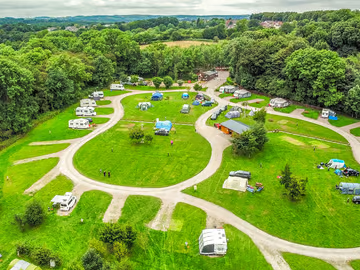
If you want to buy land for a campsite or glamping business, the land itself is only part of the decision. A site may look ideal, but its planning position, access, drainage, utilities, landscape, ecology and relationship with nearby properties can all affect whether it is suitable for your proposed business.
The right approach is to assess the land and its potential use before committing to a purchase. In many cases, the planning position will be one of the most important factors to investigate.
What should you check before buying land for a campsite?
Before buying, consider the site’s planning position, location, access, utilities, drainage, flood risk, landscape, ecology, neighbouring uses and potential operating requirements. You should also establish whether the existing use is lawful and whether planning permission or a change of use may be required for the campsite or glamping proposal.
The most suitable land is not necessarily the cheapest land. It is land where the proposed use has a realistic prospect of being acceptable and commercially viable.
1. Decide what type of campsite you want to operate
Start with the business model rather than the land.
A traditional campsite, touring caravan site, camping field and glamping business can have very different requirements. A small seasonal site may have different infrastructure needs from a larger commercial operation with permanent facilities and multiple accommodation units.
Think about:
- How many pitches or units you want
- Whether the site will be seasonal or operate throughout the year
- Whether you want tents, touring caravans, motorhomes, cabins, pods or other accommodation
- Whether you need reception, toilet and shower facilities
- Whether you intend to provide parking or other visitor facilities
- How much space is needed for access, circulation and landscaping
- What level of income the site needs to generate
Having a clear proposal makes it much easier to assess whether a particular piece of land is worth investigating.
2. Check the planning position before buying
Planning should be one of your first checks when considering land for a campsite or glamping business.
Do not assume that because land is already used for recreation, agriculture or another rural purpose that it can automatically be used for commercial camping or glamping.
You should investigate:
- The current lawful use of the land
- Any existing planning permissions or planning history
- Whether the proposed campsite use would require planning permission or a change of use
- Whether there are planning restrictions affecting the site
- Whether the local planning authority has published relevant planning policies
- Whether there are previous applications for tourism, recreation or accommodation uses nearby
If planning permission is likely to be required, consider taking professional planning advice before committing to the purchase.
Planning permission is not the only question
A site can appear attractive for camping but still present significant planning challenges. Access, landscape impact, ecology, flood risk, neighbouring properties and the proposed intensity of use can all influence how a proposal is assessed.
3. Look carefully at the location
Location matters for both planning and the commercial success of a campsite.
Consider how close the site is to the attractions, towns, countryside, beaches, walking routes or other destinations that could attract visitors.
You should also consider practical matters such as:
- Distance from major roads
- Travel times for visitors
- Local shops and services
- Nearby visitor attractions
- Noise and surrounding land uses
- Views and the character of the surrounding landscape
- Proximity to residential properties
A remote site may offer an attractive rural experience, but isolation can also make access and servicing more difficult.
4. Check access to the land
Good access is particularly important for a commercial campsite.
Visitors may arrive in cars, campervans, caravans or towing vehicles, while deliveries, waste collection and maintenance vehicles may also need access.
Check:
- Where vehicles enter the site
- The width and condition of the access
- Visibility at the entrance
- Whether the access is suitable for the vehicles you expect
- Whether the access crosses third-party land
- Whether rights of way or easements affect the site
- Whether improvements to the access may be required
Do not rely solely on how the access looks when visiting the site. Establish the legal position as part of your due diligence.
5. Find out how the site will be serviced
Utilities can have a major effect on the cost and practicality of a campsite or glamping development.
Check the availability and likely cost of:
- Electricity
- Water
- Foul drainage
- Wastewater treatment
- Internet and telecommunications
- Other services required for your proposed operation
A site without mains services is not necessarily unsuitable, but alternative arrangements can add significant capital and operating costs.
6. Investigate drainage and flood risk
Water management is particularly important when considering land for camping.
Low-lying or poorly drained land may be unsuitable for parts of your proposal, while flood risk can create additional planning and operational considerations.
Look at the site’s topography and drainage characteristics and investigate relevant flood-risk information before proceeding.
It is also worth considering how surface water will be managed around access roads, parking areas, buildings and accommodation units.
7. Consider landscape and visual impact
Many potential campsite and glamping sites are located in rural areas where landscape character can be an important planning consideration.
Think about how visible the proposed development would be from:
- Nearby roads
- Public rights of way
- Neighbouring properties
- Nearby settlements
- Higher ground and surrounding countryside
Existing trees, hedges and natural features can sometimes help provide screening, while exposed sites may require more careful design and landscaping.
8. Check for ecological and environmental constraints
Environmental constraints can affect both the design and the cost of a proposed campsite.
Depending on the site, you may need to investigate matters such as:
- Protected habitats or species
- Ancient woodland or important trees
- Watercourses
- Sites with ecological designations
- Existing hedgerows and habitat features
- Potential impacts from lighting, noise and increased visitor activity
Early investigation can help identify issues before you spend substantial money developing a proposal.
9. Think about neighbouring properties and land uses
A campsite can change the character of a rural site through increased vehicle movements, visitors, lighting, noise and activity.
Look at the surrounding properties before buying.
Consider whether there are homes close to the proposed camping area, livestock operations, commercial premises, roads or other activities that could create conflicts.
At the same time, consider whether neighbouring uses could affect the experience you intend to offer visitors.
10. Understand the difference between buying cheap land and buying suitable land
The cheapest rural land is not necessarily the best opportunity for a campsite.
A low purchase price can be offset by the cost of access improvements, utilities, drainage, planning work, landscaping or other site requirements.
When comparing sites, consider the total cost of getting the land into a usable condition, rather than simply comparing the asking prices.
Compare the whole opportunity
Purchase price + planning costs + infrastructure + site works + professional fees + ongoing operating costs
This gives you a much better starting point for assessing whether the proposed business is commercially viable.
11. Consider whether existing buildings could add value
Some sites may include barns, agricultural buildings, former commercial buildings or other structures.
Existing buildings can sometimes provide opportunities for ancillary facilities or alternative uses, but you should not assume that an existing building can automatically be converted or used as part of your campsite business.
Check the planning history and legal use of any buildings and take advice on the proposed use before relying on them in your business plan.
12. Do your due diligence before committing to the purchase
Once you identify a site that appears suitable, carry out proper due diligence before committing yourself.
This may include:
- Title and ownership checks
- Rights of way and access rights
- Planning history
- Planning policy considerations
- Flood-risk information
- Environmental constraints
- Utilities and servicing
- Ground conditions where relevant
- Potential development and infrastructure costs
- Commercial viability of the proposed operation
The exact investigations required will depend on the site and your proposed use.
Where can you find land for a campsite?
Potential campsite opportunities can appear in several different forms. You may find land already used for tourism or recreation, agricultural land with potential for an alternative use, smallholdings, farms or other rural property.
It is therefore worth looking beyond listings specifically described as “campsite land”. The underlying characteristics of the site may be more important than the wording used in the listing.
You can browse land for sale across the UK and register your requirements with Your Landstore if you are looking for a particular type of opportunity.
Tell Your Landstore what land you’re looking for
If you know the type of site you want but haven’t found the right opportunity yet, you can tell us what land you’re looking for.
You can specify the type of land and location you are interested in, allowing us to consider your requirements when suitable land comes to market.
Where there is a suitable match, you can receive an email alert from the day the land is listed.
Looking for land for a campsite or glamping business?
Tell us what you’re looking for, including your preferred location and requirements, and we’ll consider your search when suitable land comes to market.
TELL US WHAT LAND YOU’RE LOOKING FOR →Frequently Asked Questions
Can I buy agricultural land and turn it into a campsite?
It may be possible, but you should not assume that agricultural land can automatically be used as a commercial campsite. The proposed use may require planning permission or a change of use, depending on the circumstances. Check the planning position with the relevant local planning authority before committing to the purchase.
Do I need planning permission for a glamping business?
The planning position depends on the nature of the proposal, the existing lawful use of the land and the accommodation and facilities proposed. If your business involves a material change of use or development, planning permission may be required. Obtain site-specific planning advice before proceeding.
What type of land is suitable for a campsite?
Suitable land depends on your business model, but factors can include location, access, topography, drainage, flood risk, utilities, landscape, ecology and the planning position. Land that looks attractive for camping is not necessarily suitable for commercial development.
Is rural land suitable for glamping?
Rural land can be suitable for glamping, but its location and planning constraints need to be considered carefully. Access, landscape impact, neighbouring properties, utilities and environmental constraints can all affect the suitability of a site.
How do I find land for a campsite?
You can search land listings directly, but it can also be useful to register your requirements so that suitable opportunities can be considered when they come to market. Register your land search with Your Landstore to tell us what you are looking for.


