by
by 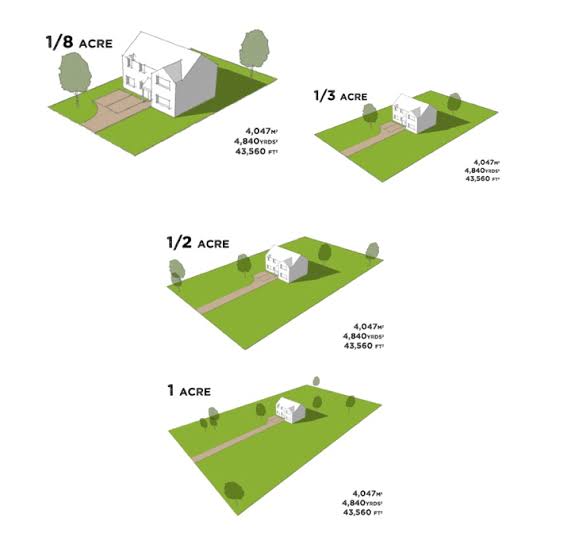
How much land do I need to build a house? There is no single plot size that works for every house or every location. The amount of land you need depends on the size and design of the house, planning requirements, access, garden or outdoor space, parking, site constraints and the character of the surrounding area.
A larger plot is not automatically a better building plot. Equally, a relatively small plot can sometimes provide enough space for a house if the layout, access and planning position work. The important thing is to assess the whole site rather than looking at acreage alone.
How Much Land Do You Need to Build a House?
For a single house, the amount of land required can vary considerably. A small urban building plot may be suitable for one house, while a rural self-build opportunity may involve a much larger area of land.
When assessing a potential plot, consider the house you want to build, the amount of garden or outdoor space you need, parking and access, the shape of the site, planning requirements, neighbouring properties and any physical or environmental constraints.
The key question is therefore not simply how many acres you need, but whether the available land provides enough suitable and usable space for your proposed house and associated requirements.
TELL US WHAT YOU’RE LOOKING FOR →There Is No Standard Plot Size for a House
People often search for a minimum acreage needed to build a house, but there is no universal plot size that guarantees a house can be built.
Planning decisions are made in relation to the individual site, the proposed development and the relevant planning policies and considerations.
Two plots with exactly the same acreage can have very different development potential.
For example, one may have a straightforward shape, good road access and an established settlement around it. Another may have poor access, significant changes in level, drainage problems, protected trees or other constraints.
This is why you should assess the characteristics of the site rather than assuming that a particular number of acres is automatically enough.
How Much Land Do I Need to Build a House? Start With the House
The first thing to establish is what sort of house you want to build.
A compact two-bedroom house will have different land requirements from a large four- or five-bedroom detached house.
Think about:
- The number of bedrooms
- The size of the house
- The number of storeys
- Garage or parking requirements
- Garden or outdoor space
- Private amenity space
- Access and turning areas
- Bin storage and servicing
- Any additional buildings or structures
If you already have an idea of the house you want to build, this can help you identify whether a particular plot is likely to provide enough usable space.
An architect or planning professional can help you explore how a proposed house might sit on a particular site before you commit to buying it.
Does a Bigger Plot Mean a Better Building Plot?
Not necessarily.
A large piece of land can appear attractive because it gives you plenty of space, but the additional land may not provide any additional development potential.
It may also introduce additional costs and responsibilities, particularly where there are large areas of landscaping, woodland, agricultural land, drainage features or other land that you do not actually need for the house.
For a self-build buyer, the objective is usually to find land that provides enough space for the proposed home and the lifestyle you want without paying for land that does not add useful value to the project.
Think About Usable Land
The total acreage of a site is not necessarily the same as the amount of land that can be practically used for a house, garden, parking and access.
Topography, trees, drainage, access, easements, planning constraints and other physical characteristics can all affect how much of the site is actually useful for your intended development.
Consider the Shape of the Plot
The shape of the land can be just as important as its size.
A long, narrow or irregularly shaped site may be more difficult to develop than a site with a straightforward layout.
When looking at a potential self-build plot, consider:
- Where the house could be positioned
- Where the access would enter the site
- Where parking could be provided
- How much garden space would remain
- Whether neighbouring properties affect the layout
- Whether the shape creates awkward or unusable areas
- Whether existing trees, buildings or other features affect the layout
A smaller site with a good shape can sometimes be more practical than a larger site with a difficult configuration.
How Important Is Access?
Access is an essential consideration when assessing land for a house.
The site needs an appropriate means of access from the public highway, and the proposed access arrangement may need to satisfy planning and highway requirements.
Consider whether:
- The land already has a suitable access
- There is adequate visibility
- The access is wide enough for the intended use
- Vehicles can enter and leave safely
- There is sufficient space for parking and turning
- The access crosses somebody else’s land
- You have the necessary legal rights to use the access
An attractive plot can become much less straightforward if creating or improving the access proves difficult or expensive.
How Much Garden Space Do You Want?
Garden requirements are another reason why the amount of land needed varies from buyer to buyer.
Some self-build buyers want a relatively compact garden that is easy to maintain. Others may want substantial private outdoor space, room for children, entertaining areas, vegetable gardens or other uses.
If you want a large garden, the land requirement will obviously be greater than for a house designed around a smaller outdoor area.
You should also consider the relationship between the house, garden, parking and neighbouring properties rather than looking at the garden area in isolation.
What About Planning Requirements?
Planning is one of the most important considerations when buying land for a house.
If a plot already has planning permission, carefully check what has actually been approved. The permission may relate to a particular house design, footprint, access arrangement and site layout.
If the land does not have planning permission, you need to understand whether there is a realistic planning opportunity before assuming that a house can be built there.
The amount of land available does not by itself create a right to build a house.
A large field may contain enough physical space for a house but still have significant planning constraints. Conversely, a smaller site within an appropriate location may have an established planning opportunity.
If planning is important to your purchase, appropriate professional advice should be obtained before committing to the land.
What If I Want a Large House?
If you are planning a larger house, you may need more land to accommodate the building, parking, garden and access comfortably.
However, the relationship between house size and plot size is not simply a mathematical calculation.
The surrounding area, existing development pattern, planning policies, site characteristics and proposed design can all influence whether a particular house is appropriate for a particular plot.
This means you should not assume that buying a very large plot automatically gives you the right to build a very large house.
What If I Want More Than One House?
If your intention is to build more than one house, you are moving beyond a straightforward single self-build plot and into a different type of land search.
You may need to consider residential development land, the potential number of units, access arrangements, infrastructure, density, planning policy and development viability.
If this is what you are looking for, our residential development land section may be more relevant than a single building plot.
You can also browse our land for sale page to see the types of opportunities currently being marketed.
Do I Need More Land If I Want a Rural Self-Build?
Not necessarily, but rural self-build buyers often have different requirements from buyers looking for a plot within an established settlement.
You may want more garden or private amenity space, views, privacy, parking, outbuildings or additional land for lifestyle purposes.
However, rural land can also bring additional considerations such as agricultural use, access, drainage, landscape impact, ecology and planning policy.
If your objective is a home with additional land rather than simply a conventional building plot, make sure your search reflects that requirement.
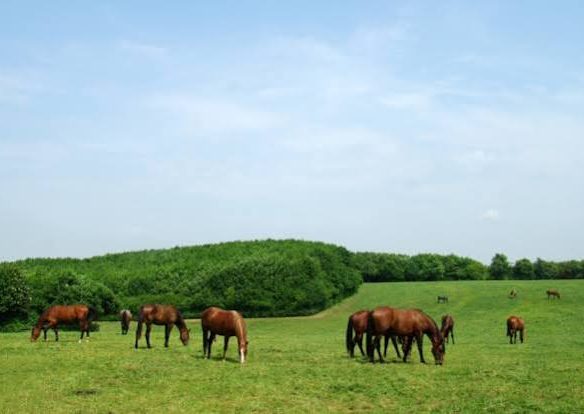
You may also want to consider smallholding land, equestrian land or other types of land depending on how you intend to use the property.
What Other Site Constraints Should You Check?
The amount of land you have available is only one part of the equation.
Before buying a potential building plot, consider whether there are constraints that could affect the location or design of the proposed house.
These could include:
- Flood risk
- Ground conditions
- Drainage
- Sloping ground
- Trees and vegetation
- Ecological constraints
- Protected structures or heritage considerations
- Rights of way
- Existing easements
- Restrictive covenants
- Nearby roads or infrastructure
- Existing neighbouring development
Some of these matters may have little effect on one site but could be significant on another.
Services and Utilities Can Affect Your Land Requirement
A potential house site also needs to be capable of being serviced.
Depending on the location, you may need to investigate:
- Electricity
- Mains water
- Foul drainage
- Surface water drainage
- Gas
- Telecommunications
Do not assume that because a service is available nearby it will be straightforward or inexpensive to connect.
The location of services, available capacity and the route of any connection can all affect the cost and practical suitability of a site.
How Much Land Can You Afford?
Your budget is another important part of deciding how much land you need.
It can be tempting to use your entire budget on the largest or most attractive plot you can find, but remember that buying the land is only one part of a self-build project.
You may also need to budget for:
- Legal fees
- Planning and professional fees
- Surveys
- Architectural and design work
- Highways or access works
- Utility connections
- Drainage
- Groundworks
- Finance costs
- Construction
For that reason, the right plot is one that works within your overall project budget, not simply one that fits your land-purchase budget.
How Should You Compare Building Plots?
Once you start finding potential plots, it helps to compare them systematically.
| What to Compare | Questions to Ask |
|---|---|
| Location | Does the location suit your lifestyle and requirements? |
| Plot size | Is there enough usable land for the house, garden, parking and access? |
| Shape | Does the shape allow a practical site layout? |
| Planning | Is there planning permission or a planning opportunity? |
| Access | Is there suitable legal and physical access? |
| Services | Are utilities available and what may connections cost? |
| Ground conditions | Are there physical or environmental issues to investigate? |
| Surroundings | Is the surrounding development and character appropriate? |
| Purchase price | Does the price leave enough budget for the wider project? |
| Overall suitability | Does the site actually meet your requirements? |
Should I Buy the Biggest Plot I Can Afford?
Not necessarily.
The best-sized plot for you is the one that provides the space you actually need for your proposed house and intended use, while remaining practical and financially viable.
Buying additional land can make sense if you have a clear reason for needing it. For example, you may want additional garden space, land for horses, a smallholding or another specific use.
But if the additional acreage does not contribute to your intended use, it may simply increase the amount you pay and the cost of maintaining the property.
What If I Cannot Find a Plot That Meets My Requirements?
Finding the right building plot can take time because suitable opportunities are not necessarily available in the exact location, size and price range you want at the same time.
You may find a plot that is the right size but in the wrong location, or a suitable location where the available land is too expensive.
Some opportunities may also be marketed for a different use even though they could be relevant to a particular buyer following appropriate planning investigation.
That is why it can be useful to define your search requirements clearly rather than simply searching for whatever land happens to be advertised today.
Tell Your Landstore What You Need
If you know the type of land you want, your preferred location, approximate acreage and budget, you can submit your search requirements to Your Landstore.
We can then consider suitable land opportunities against the requirements you have provided. Where an opportunity is considered a suitable match, relevant registered buyers can be contacted about it.
There is no guarantee that a suitable opportunity will be available, but registering your requirements means your search is clearly defined.
TELL US WHAT YOU’RE LOOKING FOR →What Is the Right Amount of Land for a Self-Build?
The right amount of land for a self-build depends on the house, lifestyle and location you have in mind.
Rather than starting with a fixed acreage, start with the requirements for your proposed home.
Self-Build Plot Checklist
- What size and type of house do I want to build?
- How many bedrooms do I need?
- How much garden or outdoor space do I want?
- Do I need a garage or additional parking?
- Will I need space for turning vehicles?
- Do I want additional land for a particular lifestyle use?
- Does the plot have suitable access?
- Is there planning permission or a realistic planning opportunity?
- Are utilities available?
- Are there drainage, flooding or ground-condition issues?
- Are there rights, covenants or other legal matters to investigate?
- Does the purchase price leave enough budget for the rest of the project?
Get Professional Advice Before You Commit
If you have found a potential building plot, it is sensible to carry out appropriate due diligence before committing to the purchase.
Your solicitor can investigate the legal position, while planning and technical professionals can advise on matters relevant to the proposed development.
The appropriate investigations will depend on the individual site and your intended use.
Do not assume that a description such as “building plot”, “potential building plot” or “land with development potential” means that your proposed house can automatically be built.
Check the planning and legal position carefully before proceeding.
Finding the Right Building Plot
There is no single answer to the question of how much land you need to build a house.
The right plot depends on the house you want to build, the amount of outdoor space you need, your budget, the location and the characteristics of the individual site.
Start by defining what you actually need. Then assess each opportunity based on its planning position, size, shape, access, services, constraints and overall cost.
A plot does not have to be the biggest or cheapest to be the right opportunity for you. It needs to work for the project you are trying to create.
Frequently Asked Questions About Buying Land to Build a House
How much land do I need to build a house?
There is no standard amount of land required to build a house. The appropriate plot size depends on the proposed house, garden, parking, access, planning position, location and characteristics of the individual site.
Can I build a house on half an acre?
A half-acre site may be suitable for a house in some circumstances, but acreage alone does not determine whether planning permission can be obtained. The location, planning position, site layout, access and other constraints all need to be considered.
Is one acre enough to build a house?
One acre provides a substantial amount of physical land, but that does not automatically mean a house can be built on it. Planning policy, location, access, site characteristics and the proposed development all need to be considered.
Do I need planning permission to build a house on land?
In most circumstances, constructing a new house requires planning permission. The exact planning requirements depend on the proposal and location, so appropriate planning advice should be obtained before purchasing land for a proposed house.
Does a bigger plot mean I can build a bigger house?
Not necessarily. The size of the plot is only one consideration. The planning position, surrounding development, site characteristics and relevant planning policies can all affect what may be acceptable on a particular site.
Can I find a self-build plot through Your Landstore?
Yes. You can browse self-build land currently being marketed and you can also tell Your Landstore what you are looking for by submitting your search requirements.
Looking for Land to Build Your Home?
Tell Your Landstore what type of plot you are looking for, where you want it and the requirements that matter to you. We can consider suitable land opportunities against your search criteria.
TELL US WHAT YOU’RE LOOKING FOR →Ready to start looking? Browse land for sale across the UK or explore our current land listings.